March 28, 2026
How AI Agents Are Replacing Manual Campaign Optimization
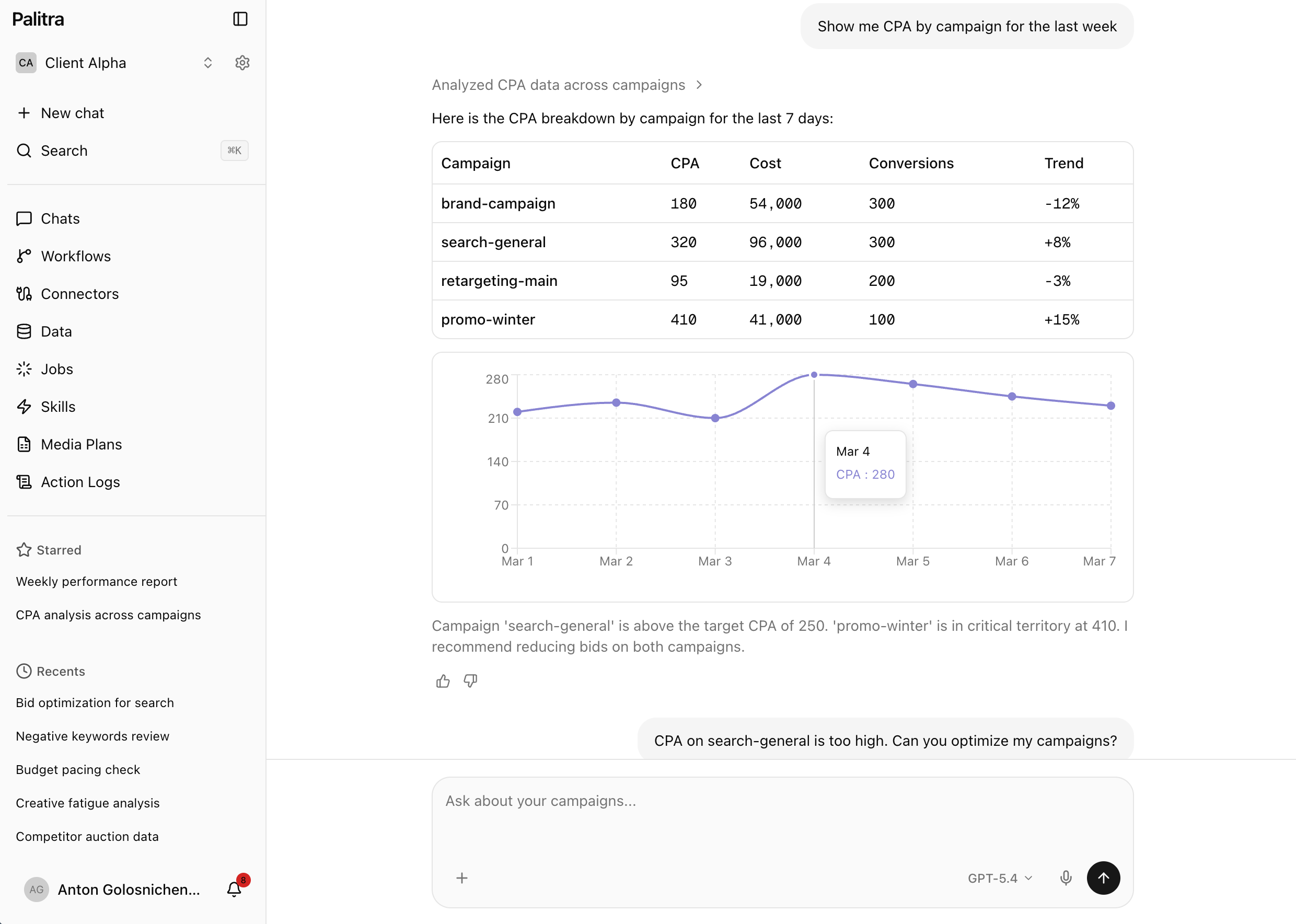
Performance marketers know the drill: open ten tabs, check each ad platform, compare metrics, adjust bids, reallocate budgets, rinse, repeat. On a good day it takes an hour. On launch day, it devours the entire morning.
AI agents flip this workflow on its head. Instead of reacting to data, you set the rules — target CPA, ROAS thresholds, pacing constraints — and the agent handles the rest.
Why Rules-Based Automation Falls Short
Most ad platforms already offer automated bidding. The problem is scope. Google’s Smart Bidding optimizes inside Google. Meta’s Advantage+ stays inside Meta. Nobody looks at the full picture.
Cross-channel optimization requires context that single-platform algorithms simply don’t have. An AI agent that ingests data from every channel can spot that your Google CPC spiked because Meta shifted audience overlap — and redistribute budget accordingly.
The Agent Workflow
A modern optimization agent follows a repeatable loop:
- Collect — Pull fresh performance data from all connected ad accounts via API connectors.
- Analyze — Run parallel analysis: campaign performance, keyword bids, search queries, creative fatigue, budget pacing, and competitive dynamics.
- Evaluate — Cross-reference with your media plan KPIs and historical optimization patterns. What worked last time? What failed?
- Recommend — Generate a prioritized list of changes with expected impact and confidence scores.
- Approve — Present recommendations for human review. You approve, reject, or modify each one.
- Execute — Push approved changes back to each platform via API.
- Learn — Track outcomes. Did the bid change improve CPA? Record the result and factor it into future recommendations.
The key word is approval. The best agents keep humans in the loop, presenting recommendations with context rather than making silent changes.
The Learning Loop
What separates a good agent from a great one is memory. After each optimization cycle, the system evaluates outcomes: did the recommended change actually improve the target KPI?
Over time, the agent builds a pattern library — it knows that reducing bids on a specific campaign type typically works, but pausing low-volume ad groups often backfires. These learned patterns compound, making each cycle smarter than the last.
What Changes for the Marketer
When optimization drops from 90 minutes to 10, the role shifts. Instead of spreadsheet jockeying, marketers spend time on creative strategy, audience research, and testing new channels.
Teams that adopted agent-driven optimization report spending 60–70% less time on routine adjustments. More importantly, they catch budget waste faster — often within minutes instead of the next morning.
Getting Started
You don’t need to overhaul your stack overnight. Start with one ad channel, connect it to an AI agent, set your KPI targets, and run in dry-run mode for a week. Review what the agent recommends without executing anything. Once you trust the recommendations, switch to live mode with human approval.
The future of performance marketing isn’t about working harder inside each platform. It’s about letting an agent handle the cross-channel complexity while you focus on strategy.