January 5, 2026
AI-Generated Reports: From Data Dump to Actionable Insight
Every Monday morning, marketing teams around the world sit through the same ritual: a 40-minute meeting where someone clicks through a deck full of charts that nobody had time to analyze. Questions are vague. Action items are vaguer.
The problem isn’t the data. It’s the report.
Why Traditional Reports Fail
Traditional performance reports are built bottom-up: pull all the data, arrange it by platform, add some charts, and present. The result is comprehensive but useless for decision-making.
Information overload. A 30-page report with every metric from every platform overwhelms the reader. When everything is highlighted, nothing stands out.
No narrative. Numbers without context are just numbers. “CPA increased 15% week-over-week” raises the question — is that bad? Compared to what? What caused it? A good report answers these questions before they’re asked.
Backward-looking. Most reports describe what happened. Stakeholders want to know what to do next.
Manual assembly. Building a cross-channel report means exporting from each platform, normalizing the data, formatting it consistently, and writing commentary. This takes hours — hours that could be spent on actual analysis.
What AI-Generated Reports Do Differently
AI-powered reporting flips the approach. Instead of showing all data and hoping the reader finds what matters, it starts with what changed and why.
Anomaly-first structure. The report leads with deviations from plan. If everything is on track, the summary is short. If three campaigns drifted off-target, those get the spotlight — with root-cause analysis attached.
Natural language insights. Instead of a chart showing CPA trending up, you get: “Campaign X CPA rose 22% due to increased competition in the Finance audience segment. Recommended action: narrow targeting to job titles that converted best last month.”
Media plan context. When the report knows your KPI targets and budget pacing goals, every metric is automatically evaluated against what it should be. No more mental math comparing actuals to the plan.
Forward-looking recommendations. The best AI reports don’t just explain the past — they suggest next steps with expected impact. “Shifting 15% of budget from Campaign Y to Campaign Z is projected to improve blended ROAS by 8% based on the last 30 days of performance data.”
Chat-Based Reporting
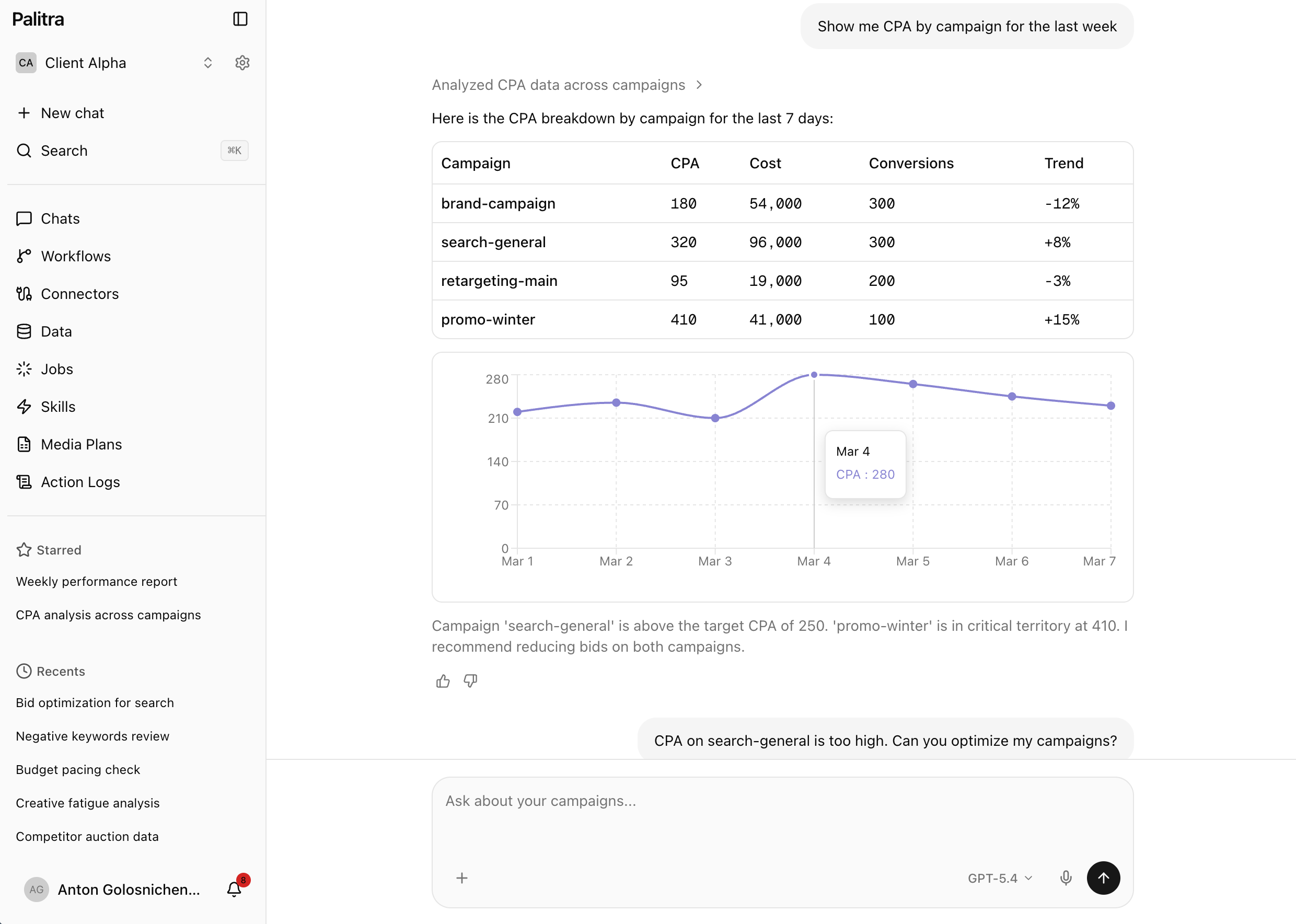
The most powerful shift is moving from static reports to conversational analysis. Instead of a pre-built deck, you ask questions:
- “How did our brand campaigns perform last week compared to plan?”
- “Which ad groups are overspending relative to their conversion rate?”
- “Compare channel efficiency for the last 30 days”
The AI queries your centralized data, generates charts and tables, and provides analysis — all in real time. Follow-up questions drill deeper without waiting for the next report cycle.
This works because the underlying data is already consolidated from all platforms. The AI translates natural language into database queries, executes them, and formats the results with visual charts and actionable commentary.
Automating the Routine
For recurring reports, you shouldn’t even need to ask. Set up a scheduled task: “Every Monday at 8 AM, generate a weekly performance summary across all channels and send it to Telegram.”
The report arrives before your team meeting. The meeting starts with “Here’s what changed and what we should do about it” instead of “Let me walk you through each platform’s numbers.”
Making the Transition
If you’re drowning in manual reporting, start with one change: centralize the data. Even connecting three platforms to a single dashboard eliminates the export-copy-paste-format cycle.
Then layer in AI analysis gradually:
- Automated anomaly detection — just flag when metrics deviate from targets.
- Natural language summaries — add context and explanation to the anomalies.
- Recommendations — include suggested actions with expected impact.
- Scheduled delivery — reports arrive in Slack, Telegram, or email without anyone asking.
The end state is a report that writes itself, surfaces what matters, and lets your team focus on decisions instead of dashboards.